
About this collection
Above the Waterline: Wildlife Art Prints from the Plains, the Bush and the Ice
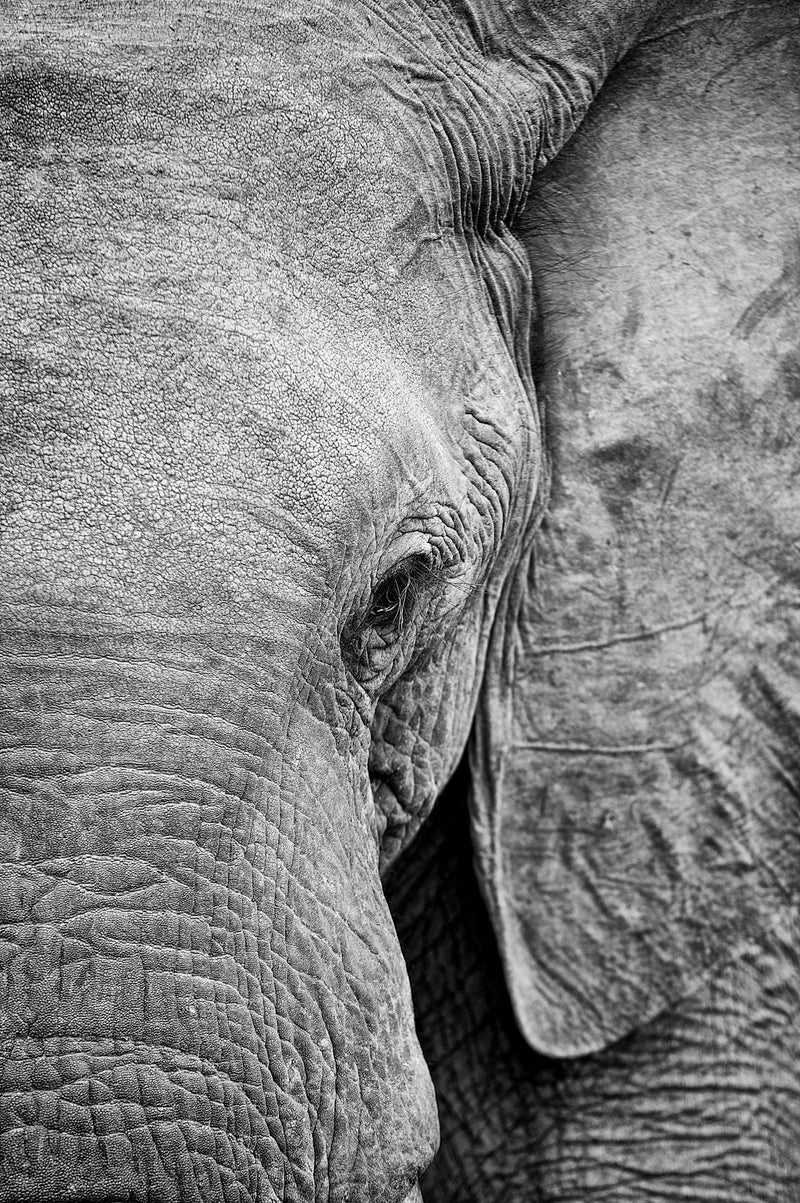
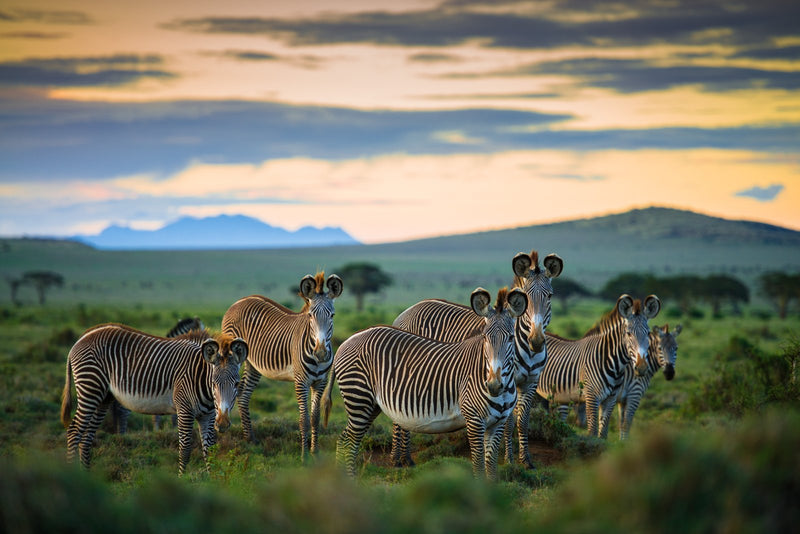
These are our wildlife art prints from above the waterline — sixty-three limited-edition pieces of elephant, rhino, cheetah, giraffe, lion, leopard, buffalo, impala, oryx, penguin and the Australian bush, made by photographers who return to the same country season after season until the animal lets them close.
African wildlife prints: the animals that hold the plains together
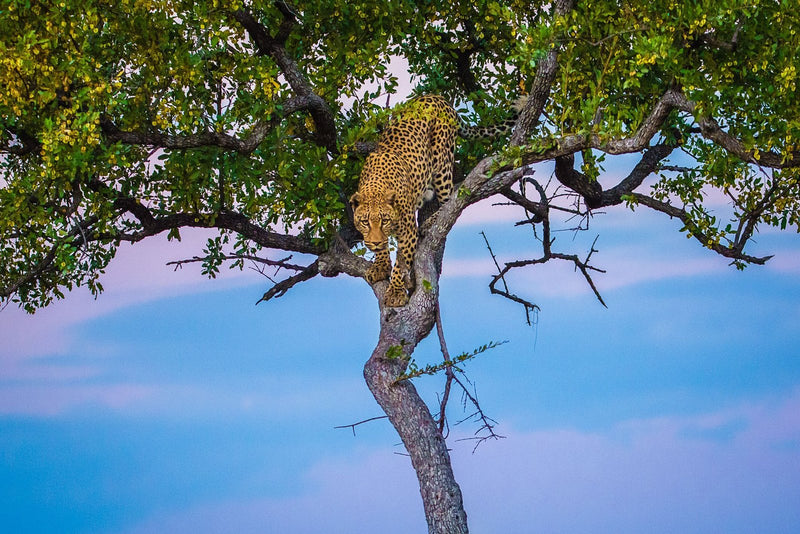
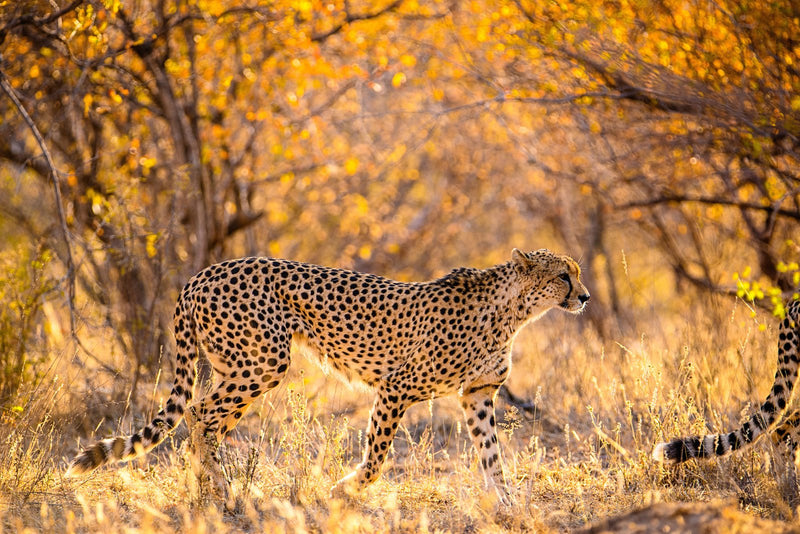
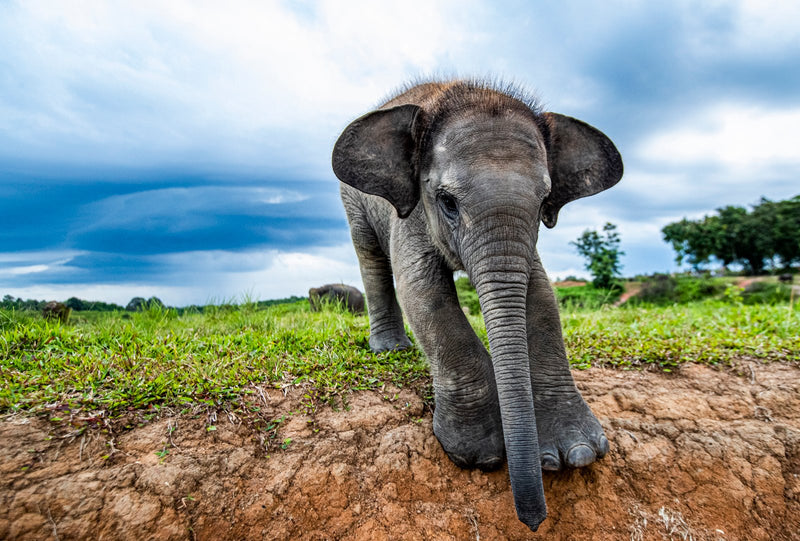
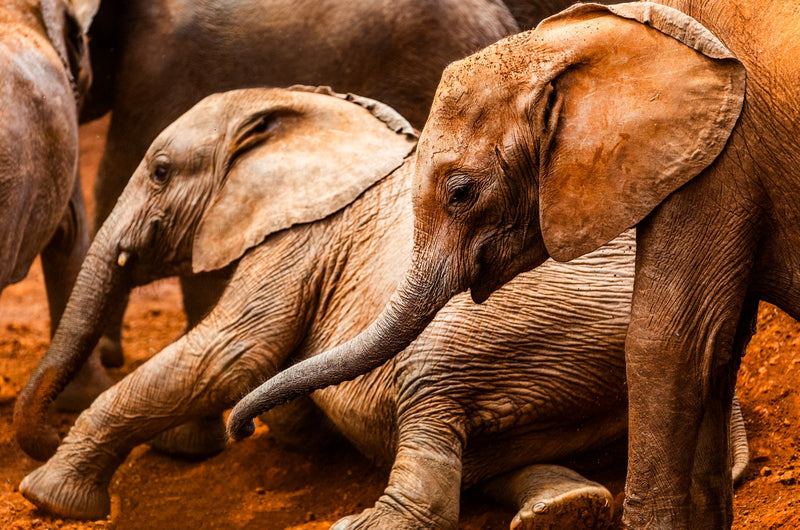
Most of this collection was made on African ground, and the longer you sit with it the more it reads as one system rather than a set of portraits. Elephants open water and push over trees, and in doing so make room for everything smaller. Buffalo and impala graze the grass down to the length that suits the next species along. Cheetah and leopard work the edges of that arrangement — one built for a forty-second sprint across open country, the other for patience, cover and a vertical exit. Oryx hold the driest ground of all, standing out the heat with a composure that looks almost indifferent. Rhino move through it like something left over from an older draft of the world, and they carry the heaviest pressure of any animal in these frames.
Our African wildlife prints are chosen to carry that sense of a working landscape: not a row of separate animals, but a set of relationships, photographed by people who understand how they fit together.
Safari wall art that remembers an actual morning
Safari wall art should feel less like decoration and more like a memory you are allowed to keep. Shannon Wild carries most of this collection, and her work has the stillness of someone who waits — a giraffe reading the horizon in The Reticulated Giraffe, the low held tension of The Hunting, the protective geometry of The Mother. Nothing is staged and nothing is hurried; you can feel the hours that sit behind each frame.
Paul Hilton, a conservation photojournalist who won a World Press Photo award in 2012 and Wildlife Photographer of the Year in 2012, 2014, 2016 and 2020, brings a photojournalist's eye to the same continent. His frames tend to be quieter and closer in, more interested in what an animal's life actually costs than in how well it poses. Hung together, the two of them give a room both registers — the wide morning and the held breath.
Wildlife photography prints in Australia, and the country beyond the savannah
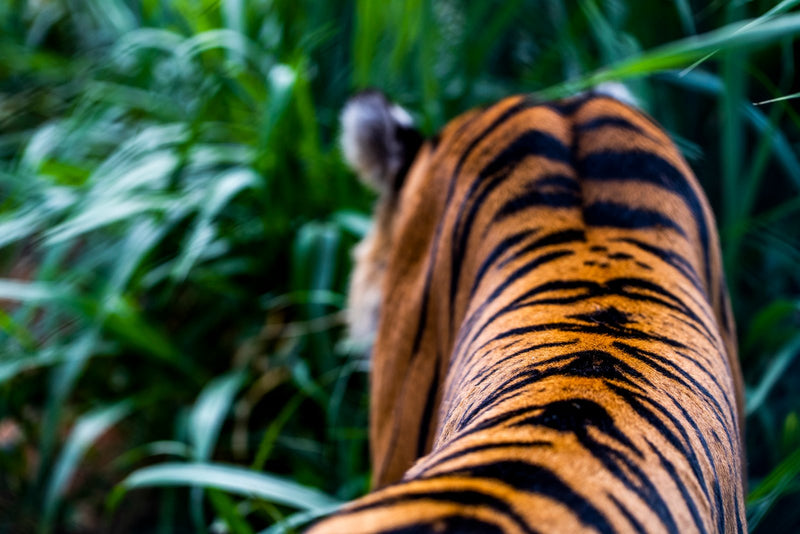
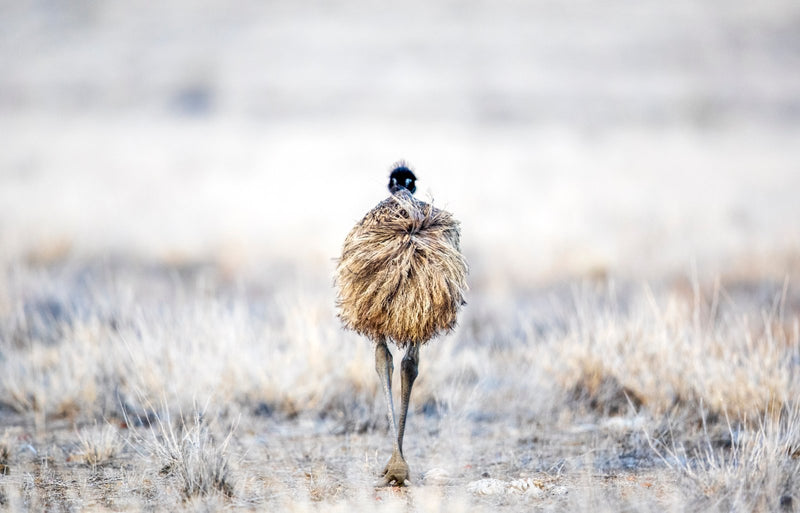
Not all of it is Africa. The collection reaches south into the Australian bush, and further south again to the ice, where penguins do the thing nothing else on land quite manages: travel badly and swim brilliantly. There is tiger country here too, in Daniel Nicholson's The Lone Tiger. What links them is not geography but a way of looking — unhurried, respectful, and interested in the animal on its own terms rather than ours. Every one of these wildlife photography prints is then made in Australia, by hand, one order at a time.
Choosing a wildlife art print for your wall
Every piece here is a limited edition, made to order and handmade in Australia on fine art paper or museum-grade canvas, and each one arrives with its certificate of authenticity. There are six sizes, from a small print that suits a hallway to an exhibition piece built to hold a whole wall, and framing options if you would rather not solve that part yourself. 30% of profits from every print goes to conservation — to the causes working on the animals standing in these frames. That is the part we would ask you to weigh alongside the image itself.
Start where your eye goes first. The King, The Reticulated Giraffe and The Baby are a good way in; so are The Mother and The Lone Tiger. If you have come for one animal in particular, the elephant, cheetah, giraffe and rhinoceros collections will narrow it down quickly. On every product page you can use View in Room to place the piece on your own wall at true size before you commit — it settles the how-big-will-that-actually-look question in about ten seconds. And any order at Extra Large or above comes with a complimentary small print of your choosing, so you can begin a wall rather than a single frame.









Canvas or fine-art paper: which should I choose?
Stretched canvas gives a gallery depth with no frame and is the recommended finish. Hahnemühle Hemp paper gives a lightly textured, archival print for your own framing, or in our oak frame.
Which size suits my wall?
Above a two-seater sofa (180–210 cm) most collectors choose 26″ × 40″ or 20 × 30. Use “Find your piece” or the scale slide on any artwork.
How limited are the editions?
Each size is limited to 111 numbered prints and never reprinted.
How long does delivery take?
Made to order: produced in 3–5 business days, then 5–7 business days for shipping. Rolled prints ship free within Australia. Framed and stretched pieces are A$10 flat delivery per order.
Can I return it?
Because each piece is made to order we don’t offer change-of-mind returns. If it arrives damaged, send a photo within 48 hours and we replace it.
Do you ship internationally?
Yes. Rates are calculated at checkout by destination.